
Los phrasal verbs del B2 First son verbos seguidos de una o dos partículas (up, out, on, off…) que juntos tienen un significado propio: give es «dar», pero give up es «rendirse». En esta guía tienes más de 80, agrupados en los 7 temas que más salen en el examen, con su traducción, un ejemplo y ejercicios del mismo tipo que los del Reading and Use of English.
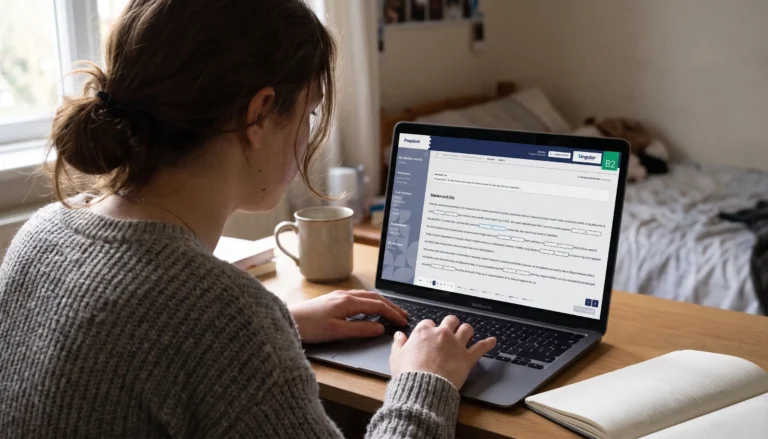
Practica los phrasal verbs con preguntas tipo examen
10 preguntas por tema, como las del Reading and Use of English. Al responder ves la correcta y qué significa, y al final puedes llevarte la lista completa en PDF.
Qué es un phrasal verb y dónde aparece en el B2 First
Un phrasal verb es un verbo más una partícula (un adverbio o una preposición). El significado no siempre se deduce de las palabras por separado, y por eso cuestan: take up no es «tomar arriba», sino «empezar una afición».
En el examen los vas a encontrar en tres sitios. En la parte 1 del Reading and Use of English (multiple-choice cloze) tienes que elegir entre cuatro opciones que se parecen mucho, como fall behind, catch up o give up. En la parte 2 (open cloze) a veces el hueco es solo la partícula: The cyclist slowed down, allowing the others to ____ up (catch). Y en el Writing y el Speaking usar bien unos cuantos hace que tu inglés suene más natural.
Phrasal verbs de deporte y aficiones
Te sirven para el Speaking, porque hablar de tus aficiones es una de las preguntas típicas de la parte 1, y para los textos del Reading sobre deporte y tiempo libre.
| Phrasal verb | Significado | Ejemplo |
|---|---|---|
| bulk up | ganar músculo | He followed a strict diet to bulk up before the new season. |
| catch up (with) | ponerse al día, alcanzar a alguien | I missed two practices, so I need to train extra hard this week to catch up with the rest of the team. |
| cheer on | animar (desde la grada) | Hundreds of fans came to the match to cheer on the local football team. |
| cool down | hacer la vuelta a la calma, estirar al acabar | Don’t forget to cool down with some easy stretches after your workout. |
| fall behind | quedarse atrás | If you skip too many rehearsals, you’ll fall behind and struggle on performance night. |
| give up | rendirse, abandonar | The workout was tough, but she refused to give up until she had finished the full set. |
| join in | unirse, participar | We’re playing a quick game of basketball after class. Come and join in if you’re free. |
| kick out | echar, expulsar | The midfielder was kicked out of the team because he missed numerous practice sessions. |
| put on (weight) | engordar, coger kilos | I put on a few kilos over Christmas, so I’ve taken up running again to lose them. |
| stay in | quedarse en casa | I’m going to stay in tonight and rest because I’ve had a very stressful week. |
| take up | empezar (una afición) | He decided to take up swimming to improve his fitness and reduce stress. |
| try out for | presentarse a las pruebas de | She’s going to try out for the school chess team because she’s very strategic and logical. |
| turn up (for) | presentarse, aparecer | Only half of the volunteers turned up for the forest clean-up, so we had to work longer. |
| warm up | calentar | The coach asked us to warm up for ten minutes before starting our drills. |
| wear out | agotar; desgastar | I’m feeling rather worn out this week because I’ve worked more than 45 hours. |
| work out | entrenar, hacer ejercicio; resolver | I usually work out at the gym three times a week before work. |
Puedes cambiar de tema en el propio ejercicio. Si prefieres practicar en papel, pide la lista completa en PDF: lleva todos los temas, dos ejercicios por tema y las soluciones.
Phrasal verbs de tecnología
Aparecen en textos sobre internet, redes sociales y trabajo con ordenador, temas muy habituales en el Reading y en el Writing.
| Phrasal verb | Significado | Ejemplo |
|---|---|---|
| back up | hacer una copia de seguridad | Make sure you back up your files before updating the software, in case you lose everything. |
| click on | hacer clic en | You need to click on the ‘Submit’ button to finish your registration. |
| fade in | aparecer poco a poco (sonido o imagen) | The film begins as the music fades in and the title appears on the screen. |
| fade out | desvanecerse, ir bajando | The song slowly fades out at the end of the track. |
| log in / log on | iniciar sesión, entrar | You must log in to your account before you can see your messages. |
| log off / log out | cerrar sesión | Don’t forget to log out when you finish using a computer in the public library. |
| plug in | enchufar | You need to plug in the charger before your laptop battery dies. |
| print off / print out | imprimir | Can you print out four copies of the report before the meeting? |
| set up | configurar, instalar; montar (un negocio) | It took me an hour to set up my new watch. |
| type in | escribir, introducir (datos) | Type in your password and press Enter. |
| wipe off | limpiar (pasando un paño) | Wipe the fingerprints off your screen with a soft, dry cloth. |
Phrasal verbs de comida y bebida
Útiles para describir hábitos, restaurantes y viajes, tanto en el Speaking como en una review del Writing.
| Phrasal verb | Significado | Ejemplo |
|---|---|---|
| agree with | sentar bien | I’ve found that gluten doesn’t agree with me. |
| cut (sth) into | cortar en (trozos) | Next, cut the apples into small pieces and add them to the rest of the ingredients. |
| dip (sth) in | mojar (en una salsa) | I’ve never liked dipping my chips in ketchup. |
| eat in | comer en casa | We try to eat in as much as possible during the week. |
| fill up (on) | llenarse (de) | Don’t fill up on bread. There’s a lot more food coming. |
| gobble down | zamparse, engullir | No need to gobble everything down like that. We still have plenty of time. |
| order in | pedir comida a domicilio | I’m not feeling well tonight, so I think I’ll order something in. |
| pick at | picotear, comer sin ganas | I was so tired that I just sat there, picking at my breakfast. |
| put on (weight) | engordar, coger kilos | I’ve put on a few kilos after my trip to Greece. |
| slice up | cortar en rodajas | Don’t forget to slice the carrots up before adding them to the soup. |
Phrasal verbs de medio ambiente y sostenibilidad
El medio ambiente es uno de los temas que más se repiten en los essays del Writing y en los textos del Reading.
| Phrasal verb | Significado | Ejemplo |
|---|---|---|
| break down | descomponerse | Organic matter breaks down easily in the environment. |
| build up | acumularse | Greenhouse gases are building up in the atmosphere. |
| cut down (on) | reducir (el consumo de) | We need to cut down on the amount of single-use plastic we buy. |
| deal with | ocuparse de, hacer frente a | It’s high time governments dealt with serious environmental issues. |
| die out | extinguirse | Scientists are worried that many species will die out in the next few decades. |
| end up | acabar (en) | Most plastic ends up in the ocean. |
| melt away | derretirse por completo | Due to climate change, the glaciers are slowly melting away and sea levels are rising. |
| pick up | recoger | After the storm, volunteers picked up litter from the beach. |
| protect (sth) against | proteger de | It’s our duty to protect our planet against the effects of climate change. |
| run out of | quedarse sin | The planet will soon run out of some non-renewable resources. |
| sort out | separar, clasificar | Households should sort out their rubbish before recycling it. |
| throw away | tirar (a la basura) | We throw away far too much food every year. |
| use up | agotar, gastar del todo | At this rate, we’re going to use up most of the planet’s non-renewable resources. |
| warm up | calentarse | Many regions are warming up faster than we realise. |
| wash away | arrastrar (el agua) | The rain washed all our footprints away. |
Phrasal verbs de estudios y educación
Los vas a necesitar para hablar de tus estudios en el Speaking y para entender los textos sobre educación.
| Phrasal verb | Significado | Ejemplo |
|---|---|---|
| look up | buscar (una palabra, un dato) | If you don’t know a word, you can look it up in the dictionary. |
| catch up (on) | ponerse al día | After missing a week of classes, I had to work hard to catch up on everything. |
| fall behind | quedarse atrás, retrasarse | She fell behind in maths after being ill for two weeks. |
| hand in | entregar | All essays must be handed in by Friday. |
| hand out | repartir | The teacher handed out copies of the worksheet before the lesson began. |
| drop out (of) | abandonar (los estudios) | He dropped out of university after his first year. |
| read up on | documentarse sobre | I need to read up on climate change before writing my report. |
| take in | asimilar, entender | There was so much new material in the lecture that I couldn’t take it all in. |
| take up | empezar (a estudiar algo) | She’s decided to take up French next semester. |
| go over | repasar | Let’s go over the answers together before the test. |
Phrasal verbs de trabajo y empresa
Habituales en emails formales, artículos y textos sobre empresas, y en el Speaking cuando hablas de planes de futuro.
| Phrasal verb | Significado | Ejemplo |
|---|---|---|
| branch out (into) | diversificarse, expandirse (a) | The company decided to branch out into Asia. |
| come up with | idear, ocurrírsele a uno | The team had to stay up late to come up with a counteroffer. |
| draw up | redactar, elaborar | The manager will draw up a new contract for you. |
| drop by / stop by | pasarse (por) | Please drop by my office on your way out. |
| fill in for (sb) | sustituir a alguien | Jane is ill today. Would you mind filling in for her? |
| follow up (on) | hacer seguimiento (de) | Could you follow up on my email before the end of the day? |
| lay (sb) off | despedir (por falta de trabajo) | Unfortunately, the company had to lay off more than 40 employees last month. |
| run (sth) by (sb) | consultar algo con alguien | I’ll run this by my manager first and get back to you. |
| sell out | agotarse (las existencias) | All the new merchandise sold out in minutes. |
| step down | dimitir, dejar el cargo | The CEO had to step down in the middle of the crisis. |
Phrasal verbs de viajes y fiestas
Viajes, fiestas y tradiciones salen a menudo en el Speaking y en los artículos y reviews del Writing.
| Phrasal verb | Significado | Ejemplo |
|---|---|---|
| carry on | seguir, continuar | Despite the rain, we carried on with the hike. |
| check in | registrarse, hacer el check-in | Let’s check in and drop our bags before heading downtown. |
| check out | dejar el hotel, hacer el check-out | Don’t forget to pay the city tax before checking out of the hotel. |
| dress up | arreglarse, disfrazarse | No need to dress up for the party. Everyone will be wearing casual clothes. |
| fit in | encajar, adaptarse | The culture was so different that it was hard to fit in at first. |
| get away | escapar(se) | I’d recommend taking a shortcut to get away from the crowds of tourists. |
| get by | apañárselas, defenderse | I can get by with basic Spanish. |
| hand down | transmitir, pasar (de generación en generación) | These customs are handed down from generation to generation. |
| look around | echar un vistazo, recorrer | Feel free to look around the room before joining your tour group again. |
| miss out (on) | perderse (algo) | I travel a lot, so I never miss out on the airline’s cheap fares. |
| set off | salir, ponerse en camino | We should set off early if we want to get to the airport on time. |
| settle down | establecerse, sentar la cabeza | After years of travelling, Jane finally decided to settle down in Melbourne. |
| settle in | instalarse, adaptarse | After a long flight, I like to settle in and relax at the hotel before going out. |
| show (sb) around | enseñar (un sitio) a alguien | My friend from Poland is in town. I’ll show her around tomorrow. |
| stop over | hacer escala | We’ll stop over in Doha before continuing to Singapore. |
| take in | visitar, ver (lugares de interés) | We took in several museums and a concert during our weekend in Vienna. |
| take part in | participar en | When I travel, I always try to take part in local festivals. |
Cómo aprender los phrasal verbs para el examen
- Un tema cada día. Lee la tabla entera, en voz alta si puedes, y fíjate en el ejemplo más que en la traducción.
- Tapa la columna del significado y di qué quiere decir cada uno. Repite al día siguiente los que hayas fallado.
- Practica con preguntas tipo examen, como las de esta guía: en el examen no te piden la traducción, sino elegir el que encaja en la frase.
- Escribe una frase tuya con los tres que más te cuesten, sobre algo que te pase de verdad. Es lo que más ayuda a recordarlos.
- Úsalos en el Speaking y el Writing, pero solo los que domines: uno bien usado suma más que tres forzados.
Comprueba si ya estás en nivel B2
Los phrasal verbs son solo una parte del examen. La prueba de nivel es gratis y en unos minutos te da una estimación de tu nivel y del examen Cambridge que te conviene.
Preguntas frecuentes sobre los phrasal verbs del B2 First
¿Qué es un phrasal verb?
Es un verbo seguido de una o dos partículas (up, out, on, off…) que juntos tienen un significado propio. Por ejemplo, give es «dar», pero give up es «rendirse».
¿Cuántos phrasal verbs necesito para el B2 First?
Cambridge no publica una lista oficial. Lo práctico es dominar los más frecuentes de los temas que más salen en el examen, como los de esta guía, y saber usarlos en contexto.
¿En qué parte del B2 First salen los phrasal verbs?
Sobre todo en las partes 1 y 2 del Reading and Use of English. También te ayudan en el Writing y en el Speaking, porque hacen que tu inglés suene más natural.
¿Hay una lista de phrasal verbs del B2 en PDF?
Sí. Puedes pedirla gratis en esta página: te la enviamos por email con los 7 temas, la traducción al español, ejemplos, dos ejercicios por tema y las soluciones.
Conclusión: pocos, por temas y en contexto
Para el B2 First no hace falta saberse cientos de phrasal verbs. Rinde más dominar los de los temas que más salen, entender qué aporta cada partícula y practicarlos en frases como las del examen. Si quieres saber cómo vas en el resto de destrezas, el siguiente paso es la prueba de nivel.