
Part 2 of the B2 First (FCE) Speaking test, the “long turn”, is the minute you speak alone comparing two photographs. This guide explains how the task works step by step, how it’s marked, the language that helps you compare and speculate, and a model answer annotated by a Cambridge examiner.
What is Part 2 of the B2 First Speaking test?
Part 2 of the B2 First Speaking test, also called the “long turn”, is the part where each candidate talks alone for about a minute about two photographs, answering a question printed above them. Then the partner answers a short question about the same photographs, and the roles are reversed. According to the Cambridge English handbook, the whole part takes about 4 minutes.
The key to doing well is understanding that you don’t need to describe everything you see. You need to pick the most relevant details, explain the similarities and differences, and connect what you say to the question.
Speaking for a minute about two photographs you’ve never seen can feel difficult. The good news is that you don’t need complicated vocabulary or a perfect speech: you need to understand the task, organise your ideas and use language that helps you compare, explain and speculate.
How Part 2 works, step by step
The long turn always follows the same sequence: the examiner gives you two photographs and a question, you speak for about a minute, and your partner answers a short question about your photos. Then you swap roles. Knowing what comes next lets you concentrate on your English instead of the format.
- Listen to the examiner’s instructions. The examiner gives you two photographs and asks you to compare them and answer a question. The photos and wording change, but the question is always printed above the photographs: it should guide your whole answer.
- Speak for about one minute. Compare the photographs and answer the question. There is no separate preparation time, so practise spotting ideas quickly: an obvious similarity, a clear difference and what the people might be feeling.
- Your partner answers a short question. When your minute is up, the examiner asks your partner a short question about your photographs. It takes about 30 seconds. Then it’s your partner’s turn with new photos, and you answer the short question.
This is what the task looks like. The examiner reads the instructions and gives you a sheet with the question and the two photographs:
Interlocutor: In this part of the test, I’m going to give each of you two photographs. I’d like you to talk about your photographs on your own for about a minute, and also to answer a question about your partner’s photographs.
Here are your photographs. They show people keeping fit in different ways. I’d like you to compare the photographs, and say what the people might enjoy about these different ways of keeping fit.
What might the people enjoy about these different ways of keeping fit?
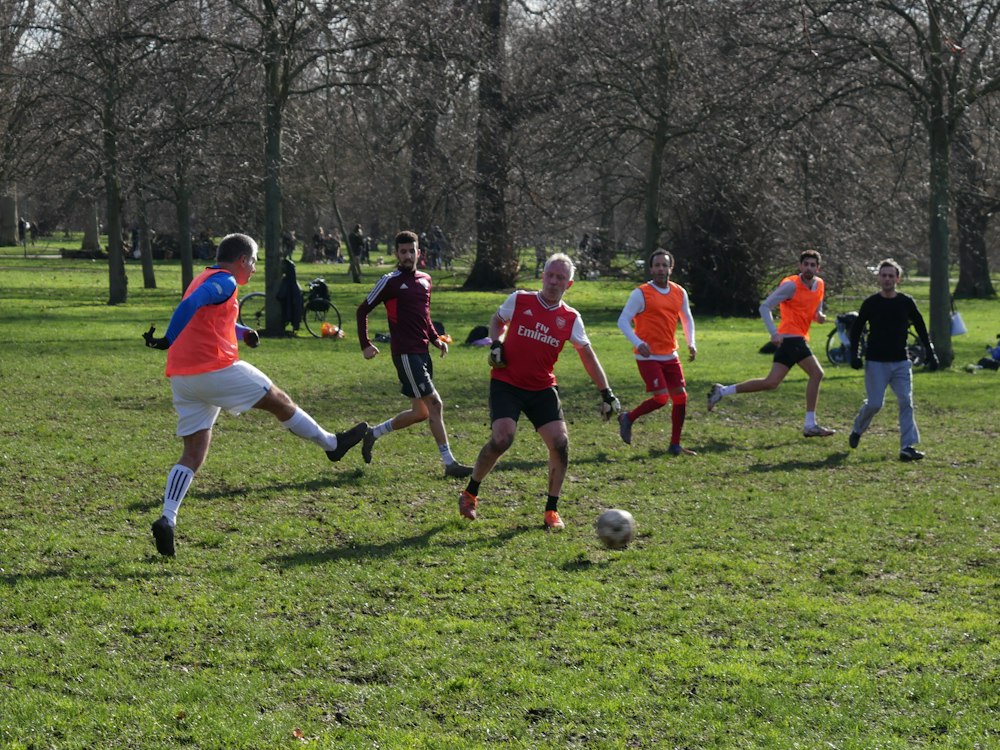
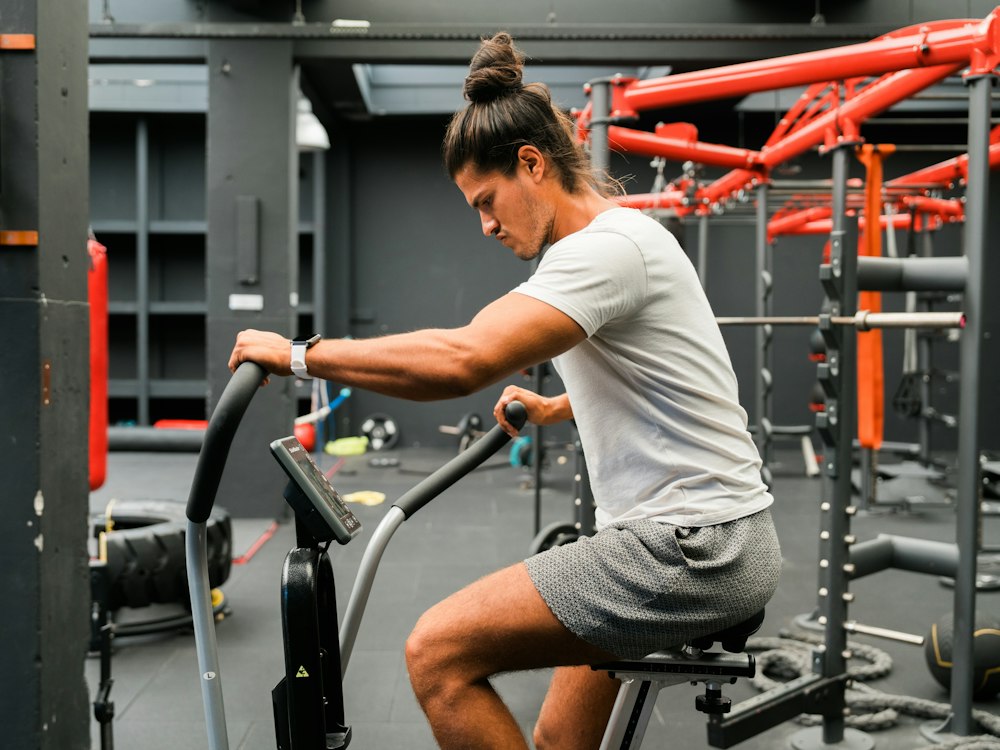
Candidate A: about 1 minute. Then the interlocutor asks Candidate B: Which of these ways of keeping fit would you prefer? Why? (about 30 seconds)
How Part 2 is marked
In the B2 First Speaking test you’re assessed on Grammar and Vocabulary, Discourse Management, Pronunciation and Interactive Communication. In Part 2 you speak alone, so the assessor mainly listens for the first three: range, organisation and how clearly you speak. You don’t need perfect English: you need to keep going and compare the photos.
| Criterion | What it means | How to show it in Part 2 |
|---|---|---|
| Grammar and Vocabulary | Your language is varied, accurate and at B2 level. | Use suitable tenses, comparatives and ways of speculating (might, may, perhaps). |
| Discourse Management | Your ideas are clearly organised and developed. | Compare related details, use linking expressions and back up your points with reasons and examples. |
| Pronunciation | You’re easy to understand. | Speak clearly, group words naturally and use sentence stress and intonation. |
| Interactive Communication | You interact effectively with your partner. Assessed mainly in Parts 3 and 4. | In Part 2: listen to your partner’s long turn, because you then answer a question about their photographs. |
Grammar and vocabulary: you don’t need advanced expressions in every sentence. A natural sentence is more useful than an elaborate one full of errors.
Discourse management: avoid describing the first photo for thirty seconds and then the second for thirty seconds without comparing them. Connect your ideas throughout.
Pronunciation: aim for clarity, not a particular accent. You can pause briefly to organise your thoughts, but don’t break every sentence into single words.
The examiners assess your performance across the whole Speaking test. One hesitation or a single grammar mistake won’t decide your result. Besides the four criteria marked by the assessor, the interlocutor (the examiner who talks to you) gives a global mark for your overall performance.
Useful language to compare, contrast and speculate
The most useful expressions are short phrases that link the two photographs, point out differences and suggest what might be happening. Learn them in groups by purpose, then practise them with different topics until you can use them without thinking.
| Purpose | Useful expressions |
|---|---|
| Introduce both photos | Both photographs show people who are… · Both situations involve…, but in different ways. · In both pictures, the people are… |
| Compare and contrast | Whereas the first photograph shows…, the second shows… · Unlike the people in the first picture, those in the second… · One similarity between the photographs is that… · The main difference is that… |
| Speculate | They might be feeling… · Perhaps they are… · It seems as though… · They might have decided to… · I get the impression that… |
| Explain | This could be because… · One reason might be… · They probably enjoy this because… |
| Conclude | Overall, … · On balance, … · I would say that… |
A useful rule: every time you make a point, add a reason. Instead of saying only They look happy, say They look happy because they’re spending time together. Your answer means more and it’s easier to keep talking.
An annotated model answer
A strong answer combines description, comparison and speculation, and keeps the question at the centre. This is the model answer for the task above: Photo A shows a group of friends playing football in a park, Photo B a young person exercising alone in a gym, and the question is “What might the people enjoy about these different ways of keeping fit?”
Model answer · Part 2 · 172 words
Both photographs show people doing physical exercise, although they are keeping fit in rather different ways. In the first picture, a group of friends are playing football outdoors, whereas in the second, a young person is working out alone in a gym.
Compares straight away: the shared topic (exercise), then whereas for a clear difference
One thing the people in both pictures might enjoy is the opportunity to stay healthy and improve their fitness.
Answers the actual question: what the people might enjoy, not a list of objects
However, the people in the first photograph may be having more fun because they can spend time with their friends while exercising. They might also enjoy the competitive aspect of playing a team sport.
Speculates instead of stating facts: may be having, might also enjoy, with a reason (because…)
By contrast, the person in the gym may prefer exercising independently. Perhaps they find it easier to concentrate on their own goals without having to depend on other people. They can also choose their own routine and work at their own pace.
Clear contrast (By contrast) and more speculation with reasons: Perhaps…, They can also…
Overall, I think both activities can be enjoyable, but for different reasons. Playing a team sport offers more opportunities for socialising, while going to the gym might suit someone who prefers independence and personal challenges.
Ends with a conclusion that sums up the contrast and answers the question
Why does this answer work?
- It compares the photographs immediately. The opening names the shared topic and uses whereas to set up a clear difference. Linking expressions make the comparison easy to follow.
- It answers the actual question. Rather than listing what’s in the photos, the speaker explains what the people might enjoy.
- It speculates instead of stating facts. The speaker makes reasonable suggestions rather than claiming to know what the people think.
- It ends with a clear conclusion. The last sentence sums up the main contrast and answers the question.
The Examiner’s view: what I see in the room
From an examiner’s point of view, a strong Part 2 isn’t about describing every detail in the photographs or using the most sophisticated vocabulary. It’s about communicating clearly, comparing the photographs well and answering the question throughout your minute.
These tips will help you go into Part 2 more relaxed:
- Know the format and what’s expected of you. Listen carefully to the examiner’s question and identify what it focuses on.
- Don’t underestimate the full minute. Practise talking about random pictures for exactly 60 seconds before the exam.
- Comparing and contrasting is your priority. A common mistake is to describe each picture separately without explaining how they’re similar or different.
- Develop your ideas and speculate. Say what the people might be feeling or why they might be doing it.
- Don’t try too hard. Long, complicated sentences lead to grammar mistakes, and memorised phrases can sound unnatural.
- Don’t panic if you hesitate or make a mistake. A short pause to organise your thoughts is fine. If you lose your train of thought, go back to the question and make one more relevant comparison.
The examiner’s takeaway: focus on the question, compare both photographs, explain your ideas and keep communicating. A well-organised, relevant answer works far better than a detailed description that misses the point. With a clear structure, relevant comparisons and regular timed practice, you can make your one minute count.
Check how close you are to B2
Speaking is one of four papers. The level test is free and in a few minutes gives you an estimate of your level and the Cambridge exam that suits you.
B2 First Speaking Part 2 FAQ
What happens if I finish early?
Develop your ideas a little more rather than stopping after a few sentences: add a comparison, explain a possible reason or connect your point to the question. You don’t need to fill the time with irrelevant details.
Do I have to describe both photographs?
Yes, you should talk about both and compare them. But you don’t need to describe every detail: choose the ones that help you answer the question and explain the similarities or differences.
What if I can’t think of enough ideas?
Start with the obvious similarity, find one clear difference and think about how the people might feel or what they might enjoy. Use the photographs for ideas rather than inventing a complicated explanation.
Should I use advanced vocabulary?
Use a range of vocabulary you can control. Relevant words such as independent, challenging, relaxing or sociable are worth more than complicated expressions you can’t use naturally.
Can I memorise a model answer?
Memorise useful expressions and practise a flexible structure, but not a whole speech. The photographs and questions change, so you need to adapt your language to the task in front of you.
How long is Part 2 of the B2 First Speaking test?
About 4 minutes in total, according to the Cambridge English handbook: about a minute for each candidate’s long turn, plus about 30 seconds each for the short question about the partner’s photographs.

 Nora Bianco
23 Oct 2026

 Lauren Jarman
5 Nov 2026